
Occupational Health and Safety (OH&S) management is an essential function in every organization, regardless of its size or industry. From manufacturing plants and construction sites to healthcare facilities and corporate offices, ensuring a safe and healthy workplace is critical for protecting employees, maintaining legal compliance, and achieving sustainable business growth.
At the heart of every effective Occupational Health and Safety Management System (OHSMS) is the Occupational Health & Safety (OH&S) Manager. This professional is responsible for identifying workplace hazards, implementing safety controls, promoting employee well-being, ensuring compliance with applicable legislation, and driving continual improvement in occupational health and safety performance.
With organizations increasingly adopting ISO 45001:2018 Occupational Health and Safety Management Systems, the role of the OH&S Manager has become even more strategic. Beyond compliance, they help organizations build a proactive safety culture, reduce workplace incidents, and improve operational efficiency.
This comprehensive guide explores the responsibilities, qualifications, skills, certifications, and ISO 45001 requirements related to the role of an OH&S Manager.
Who is an OH&S Manager?
An Occupational Health & Safety (OH&S) Manager is a professional responsible for planning, implementing, monitoring, and continually improving an organization’s occupational health and safety management system.
The primary objective of an OH&S Manager is to eliminate or reduce workplace risks by identifying hazards, implementing preventive measures, ensuring compliance with legal requirements, and promoting employee participation in safety initiatives.
They collaborate with senior management, supervisors, employees, contractors, regulatory authorities, and certification bodies to ensure workplace safety remains a top organizational priority.
Why is the Role of an OH&S Manager Important?
Every year, workplace accidents and occupational illnesses result in financial losses, legal penalties, reduced productivity, and human suffering. An effective OH&S Manager helps organizations prevent these outcomes by implementing systematic safety practices.
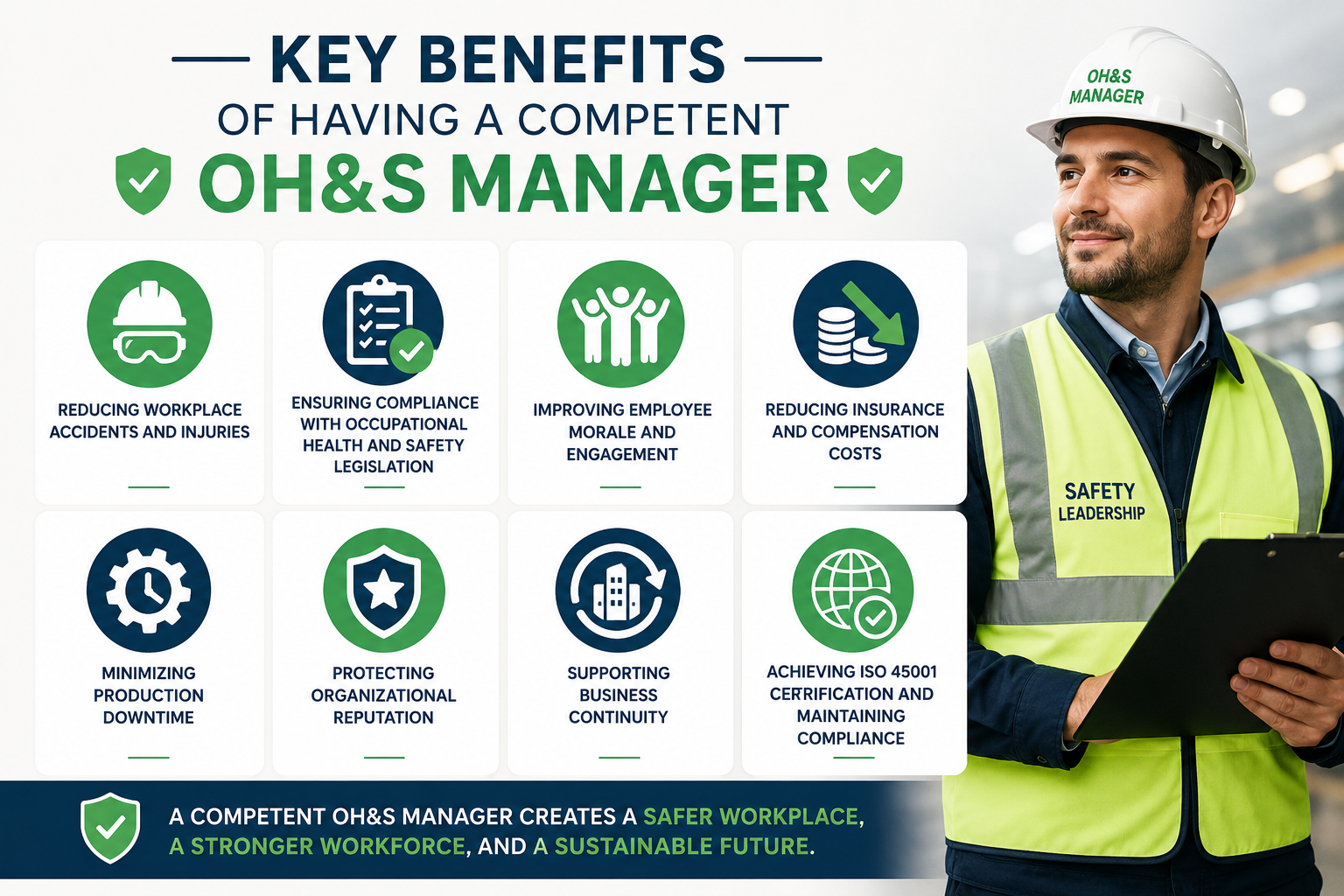
Key benefits of having a competent OH&S Manager include:
Reducing workplace accidents and injuries
Ensuring compliance with occupational health and safety legislation
Improving employee morale and engagement
Reducing insurance and compensation costs
Minimizing production downtime
Protecting organizational reputation
Supporting business continuity
Achieving ISO 45001 certification and maintaining compliance
Core Responsibilities of an OH&S Manager
1. Develop and Implement OH&S Policies
An OH&S Manager develops health and safety policies that define the organization’s commitment to providing a safe workplace.
Responsibilities include:
Creating safety manuals and procedures
Defining employee responsibilities
Establishing safe work practices
Updating policies based on legal and operational changes
Communicating policies throughout the organization
Policies should be regularly reviewed to ensure they remain effective and aligned with business objectives.
2. Ensure Compliance with Legal Requirements
One of the most important responsibilities is ensuring compliance with applicable occupational health and safety laws and regulations.
This includes:
Monitoring legal updates
Conducting compliance assessments
Maintaining regulatory documentation
Preparing for inspections
Coordinating with government authorities
Non-compliance can lead to penalties, legal action, and business interruptions.
3. Implement an ISO 45001 Occupational Health and Safety Management System
Many organizations implement ISO 45001:2018 to establish a structured approach to managing occupational health and safety risks.
The OH&S Manager plays a key role in implementing and maintaining the Occupational Health and Safety Management System (OHSMS) by:
- Establishing the OH&S management framework
- Identifying organizational risks and opportunities
- Ensuring leadership involvement
- Promoting worker consultation and participation
- Managing documented information
- Monitoring OH&S objectives
- Conducting internal audits
- Supporting management reviews
- Driving continual improvement
4. Conduct Risk Assessments
Risk assessment is the foundation of effective occupational health and safety management.
An OH&S Manager identifies hazards such as:
- Physical hazards
- Mechanical hazards
- Chemical exposure
- Electrical risks
- Ergonomic issues
- Biological hazards
- Fire hazards
- Psychosocial risks
Each hazard is evaluated based on:
Probability of occurrence
Severity of consequences
Existing controls
Additional preventive measures
5. Hazard Identification
Hazard identification is a continuous process.
Common methods include:
Workplace inspections
Job Safety Analysis (JSA)
Hazard reporting systems
Employee observations
Safety committee meetings
Incident investigations
The objective is to identify hazards before accidents occur.
6. Conduct Workplace Inspections
Routine inspections help identify unsafe conditions and unsafe behaviors.
Inspection areas may include:
Machinery and equipment
Electrical installations
Emergency exits
Fire protection systems
Chemical storage
PPE compliance
Housekeeping
Work at height activities
Confined spaces
Inspection findings should be documented and corrective actions tracked.
7. Investigate Incidents and Near Misses
When incidents occur, the OH&S Manager investigates to determine root causes rather than assigning blame.
The investigation process typically includes:
Collecting evidence
Interviewing witnesses
Reviewing procedures
Identifying contributing factors
Performing root cause analysis
Recommending corrective and preventive actions
Near-miss investigations are equally important because they help prevent future accidents.
8. Deliver Health and Safety Training
Employees need appropriate knowledge and competence to work safely.
Training responsibilities include:
New employee induction
Job-specific safety training
PPE usage
Fire safety
First aid awareness
Manual handling
Chemical safety
Emergency response
Contractor orientation
Refresher training
Regular training helps build a strong safety culture.
9. Emergency Preparedness and Response
The OH&S Manager develops emergency preparedness plans for situations such as:
Fire
Chemical spills
Gas leaks
Natural disasters
Medical emergencies
Equipment failures
Responsibilities include:
Preparing emergency procedures
Organizing evacuation drills
Maintaining emergency equipment
Coordinating emergency response teams
Reviewing emergency performance
10. Manage Personal Protective Equipment (PPE)
PPE serves as the last line of defense against workplace hazards.
Responsibilities include:
Selecting suitable PPE
Conducting PPE assessments
Training employees
Monitoring proper use
Inspecting damaged equipment
Managing PPE inventory
Examples include helmets, gloves, respirators, hearing protection, eye protection, and fall-arrest systems.
11. Monitor Safety Performance
An OH&S Manager measures organizational safety performance using Key Performance Indicators (KPIs), including:
Lost Time Injury Frequency Rate (LTIFR)
Total Recordable Incident Rate (TRIR)
Near-miss reporting
Corrective action completion
Training completion rates
Audit findings
Safety observations
Employee participation
These metrics help identify trends and areas for improvement.
12. Maintain Safety Documentation
Accurate documentation supports compliance and continual improvement.
Typical records include:
Risk assessments
Incident reports
Training records
Inspection reports
Internal audit reports
Emergency drill records
Safety meeting minutes
Corrective action reports
Proper documentation is also essential during external certification audits.
13. Conduct Internal Audits
Internal audits verify whether the OH&S Management System is functioning effectively.
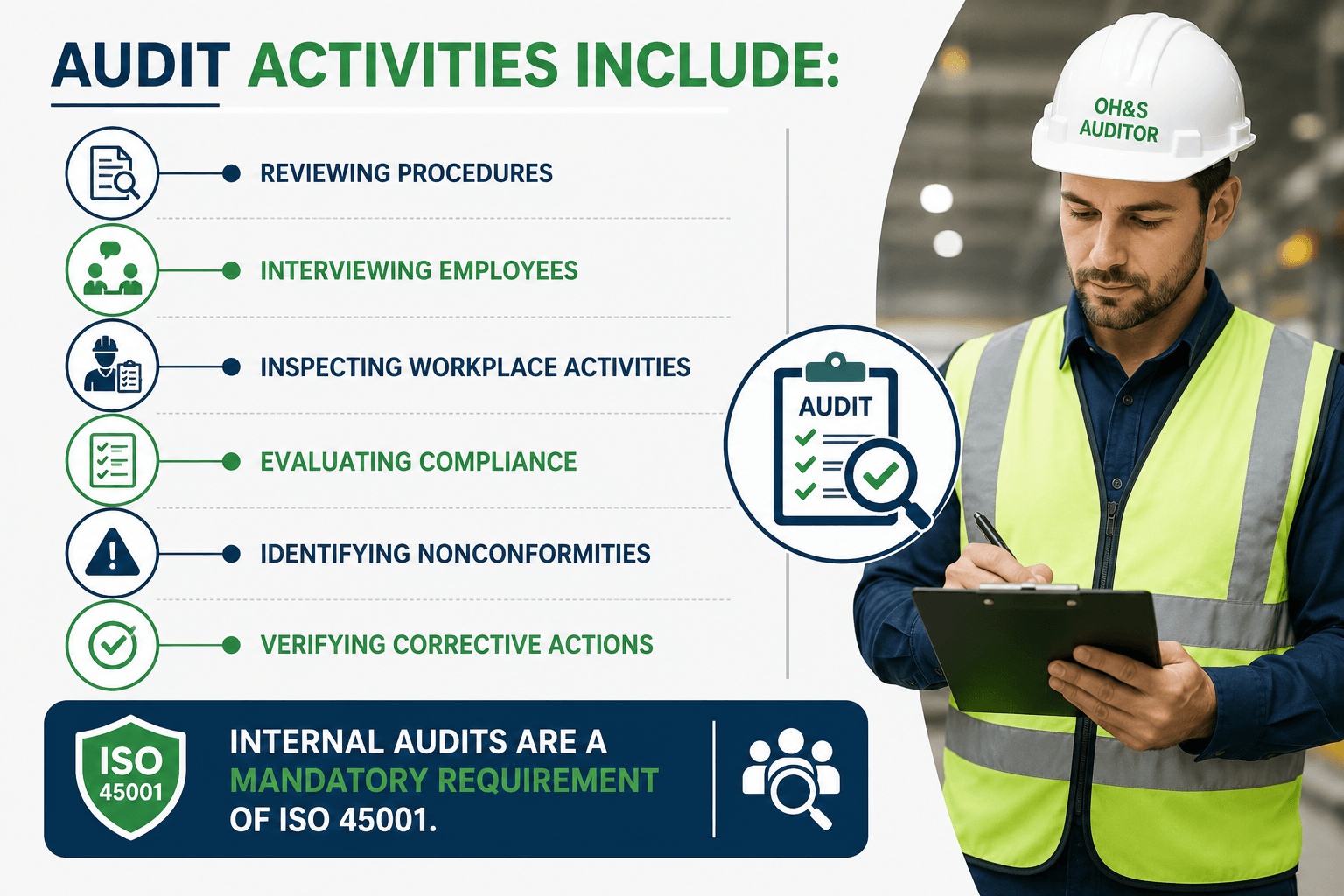
Audit activities include:
Reviewing procedures
Interviewing employees
Inspecting workplace activities
Evaluating compliance
Identifying nonconformities
Verifying corrective actions
Internal audits are a mandatory requirement of ISO 45001.
14. Promote a Positive Safety Culture
A successful OH&S Manager encourages employees to actively participate in workplace safety.
This includes:
Conducting toolbox talks
Organizing safety campaigns
Recognizing safe behavior
Encouraging hazard reporting
Leading safety committee meetings
Supporting employee engagement
A positive safety culture reduces incidents and improves overall organizational performance.
15. Manage Contractor and Visitor Safety
Contractors and visitors must also comply with workplace safety requirements.
Responsibilities include:
Contractor prequalification
Site induction
Permit-to-work coordination
Monitoring contractor activities
Evaluating contractor safety performance
16. Drive Continual Improvement
Continual improvement is one of the key principles of ISO 45001.
An OH&S Manager regularly:
Reviews safety objectives
Evaluates audit findings
Analyses incident trends
Updates procedures
Implements corrective actions
Identifies improvement opportunities
Qualifications Required for an OH&S Manager
Although requirements vary by industry and country, employers generally prefer candidates with the following qualifications:
Educational Qualifications
Bachelor’s degree in Occupational Health and Safety
Engineering (Mechanical, Civil, Electrical, Industrial, or Chemical)
Environmental Science
Industrial Safety
Public Health
Science or related disciplines
Some organizations may also accept diploma holders with extensive practical experience.
Professional Certifications
Common certifications include:
ISO 45001 Lead Auditor
ISO 45001 Internal Auditor
NEBOSH International General Certificate (IGC)
NEBOSH Diploma
IOSH Managing Safely
Certified Safety Professional (CSP)
Occupational Safety and Health certifications recognized in the relevant country
First Aid and Fire Safety certifications
Essential Skills of an OH&S Manager
A successful OH&S Manager requires a combination of technical knowledge, leadership, and communication skills.
Technical Skills
Occupational health and safety legislation
Risk assessment and hazard identification
Incident investigation
Root cause analysis
Emergency planning
Fire safety management
Industrial hygiene basics
Chemical safety
Permit-to-work systems
Internal auditing
ISO 45001 implementation
Documentation management
Data analysis and reporting
Soft Skills
Leadership
Communication
Problem-solving
Decision-making
Team management
Conflict resolution
Training and coaching
Time management
Negotiation
Attention to detail
Critical thinking
Continuous improvement mindset
ISO 45001 and the Role of an OH&S Manager
ISO 45001:2018 provides a globally recognized framework for managing occupational health and safety risks.
An OH&S Manager is typically responsible for supporting the organization in meeting key ISO 45001 requirements, including:
Understanding the organization’s context
Identifying interested parties
Managing OH&S risks and opportunities
Ensuring worker consultation and participation
Defining OH&S objectives
Monitoring operational controls
Evaluating legal compliance
Conducting internal audits
Supporting management reviews
Managing corrective actions
Driving continual improvement
The OH&S Manager also coordinates external certification audits and ensures the Occupational Health and Safety Management System remains effective.
Industries That Employ OH&S Managers
OH&S Managers are required across various industries, including:
Manufacturing
Construction
Oil and Gas
Food Processing
Healthcare
Pharmaceuticals
Logistics and Warehousing
Mining
Chemical Processing
Utilities
Aviation
Marine
Hospitality
Education
Retail
Career Growth for an OH&S Manager
With experience and additional certifications, an OH&S Manager can progress into senior roles such as:
Senior OH&S Manager
HSE Manager
EHS Director
Corporate Safety Manager
Risk Management Manager
Compliance Manager
Sustainability and ESG Manager
ISO Management Representative
Health, Safety, Environment, and Quality (HSEQ) Manager
Conclusion
The Occupational Health & Safety Manager plays a critical role in protecting employees, ensuring legal compliance, and improving organizational performance. Their responsibilities extend far beyond accident prevention—they lead risk management initiatives, implement safety management systems, conduct audits, provide training, manage emergency preparedness, and drive continual improvement.
With organizations increasingly adopting ISO 45001:2018, the demand for skilled OH&S Managers continues to grow. Professionals with the right education, industry experience, leadership capabilities, and recognized certifications such as ISO 45001 Lead Auditor or NEBOSH are well-positioned for rewarding careers in occupational health and safety.
By investing in competent OH&S leadership, organizations can create safer workplaces, enhance employee confidence, reduce operational risks, and achieve long-term business success.
